Mangal Dosha (Kuja Dosha): Myths, Facts, and Remedies
· By Jag Mallah, Vedic astrologer · Analysis of Karma
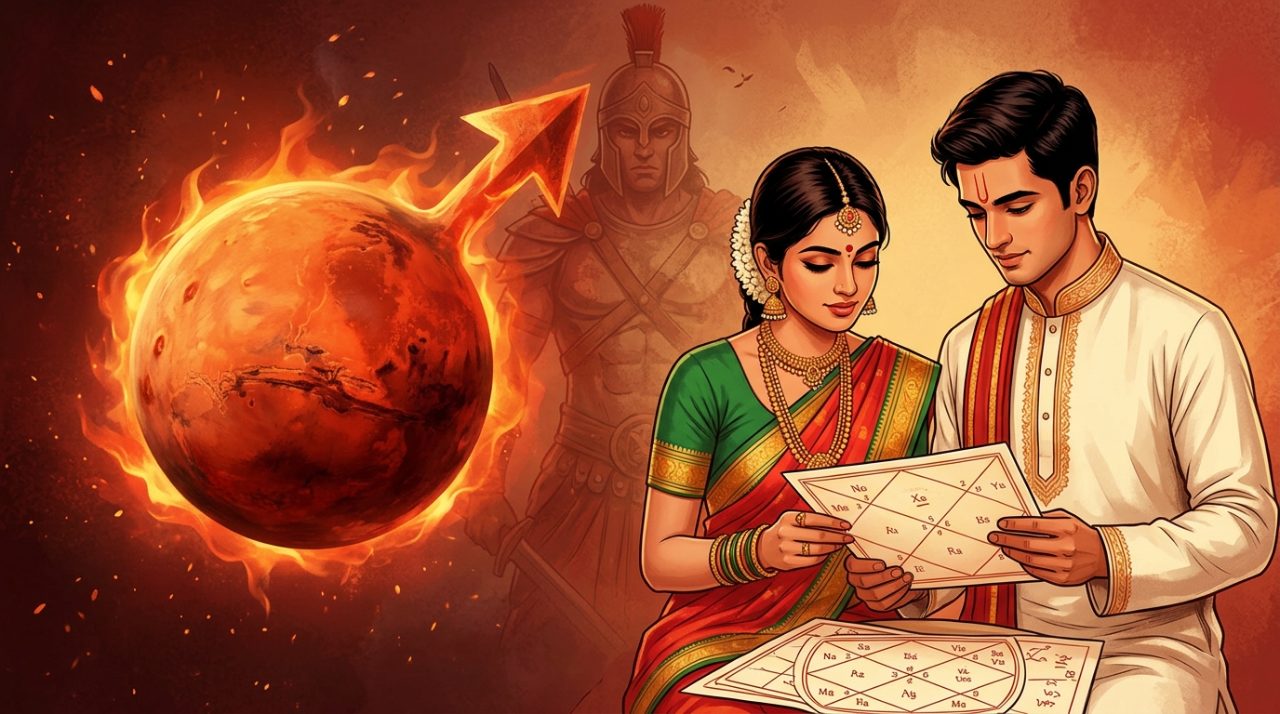
Few astrological terms cause as much panic as Mangal Dosha, also known as Kuja Dosha or being “Manglik.” It occurs when Mars sits in certain houses — the 1st, 4th, 7th, 8th or 12th — of the birth chart, and it is most often discussed around marriage. When a chart is called Manglik, families often worry.
The myths run wild: that a Manglik person brings misfortune, or that such a marriage is doomed. The facts are far gentler. Mangal Dosha is just one factor among many in marriage matching, and it is frequently cancelled or reduced by other placements in the chart. An experienced Vedic astrologer weighs the whole picture, not a single label. In many cases the so-called dosha is mild, or already neutralised.
Where a genuine, strong dosha exists, classical remedies are well established: specific Mars mantras, charitable acts, fasting on Tuesdays, and in some traditions matching with another Manglik chart so the effect is balanced. The goal is never fear — it is a steady, well-suited marriage. If Mangal Dosha is worrying you, a proper Kundli Milan will tell you far more than the word “Manglik” ever could.
Classical Foundations in Jyotish
What Mars represents
In Jyotish, Mars (Mangal, also called Kuja or Bhauma, "son of the Earth") is the commander among the planets. Brihat Parashara Hora Shastra associates it with courage, energy, decisiveness, siblings, land and property, blood and physical strength. Mars is the fire that gets things done. In a balanced chart it gives drive, protection and leadership; in an afflicted position it can show impatience, anger, conflict or haste.
Why Mars matters for marriage
Mangal Dosha reflects the concern that this fiery energy, placed in houses connected with partnership, can strain married life. The houses involved each touch marriage in a different way:
- 1st house: your temperament and how you behave within a relationship.
- 2nd house: family life and speech (counted mainly in South Indian practice).
- 4th house: domestic peace and emotional security at home.
- 7th house: the spouse and the partnership itself.
- 8th house: longevity of the marriage, shared resources and sudden changes.
- 12th house: intimacy, the bed and expenses.
The dosha is traditionally checked from three reference points: the ascendant (the body and outer life), the Moon (the mind) and Venus (love and the spouse). A Mars placement that triggers the dosha from only one of these is much milder than one that repeats from all three.
Where the classical idea comes from
Mangal Dosha developed mainly through later works on marriage compatibility and through regional practice, rather than as a central topic in BPHS. The principles behind it are classical, though: the significations of Mars, the 7th and 8th houses, and the strength of planets. That is why an experienced astrologer evaluates it with the same tools used for any other combination, rather than treating it as a stand-alone label.
The same idea travels under different names: Manglik in North India and Punjab, Kuja Dosha in Kerala and Karnataka, and Chevvai Dosham in Tamil Nadu. The houses counted and the exceptions accepted vary slightly between these traditions. That is one more reason two astrologers can label the same chart differently, and why the reasoning behind a verdict matters more than the label.
House, Planetary & Dasha Dynamics
The cancellations (Parihara)
Traditional texts and long practice list many conditions that reduce or cancel Mangal Dosha. Among the most widely applied:
- Mars in its own sign (Aries or Scorpio) or exalted (Capricorn), where its energy is disciplined rather than destructive.
- Jupiter's aspect or conjunction with Mars, or Jupiter strong in a Kendra, which softens Mars considerably.
- Both partners having a comparable Mangal Dosha, so the energies are balanced. This is the classic reason Manglik charts are matched with Manglik charts.
- Mars as Yogakaraka: for Cancer and Leo ascendants, Mars rules both a Kendra and a Trikona and acts as one of the chart's greatest benefactors.
- Specific sign-and-house exceptions named in traditional lists, such as Mars in its own sign in the 4th house.
- A weak or combust Mars, or a Mars whose dispositor is very strong.
When these are applied honestly, a large share of charts called "Manglik" turn out to have a mild or cancelled dosha. This is the single most important fact families should know.
Strength in the Navamsha
The D-9 Navamsha confirms how Mars really behaves. A Mars that triggers the dosha in the birth chart but sits well-placed or dignified in the Navamsha is far gentler in married life. The 7th house and the 7th lord of the Navamsha show the deeper health of the marriage itself.
Timing: when Mars speaks
A dosha matters most when Mars is active. That means its own Mahadasha of seven years, an Antardasha of Mars within another period, or the dasha of a planet closely linked to Mars. Transits of Mars, and especially of Saturn, over the natal 7th house or Mars can also bring its themes forward. Outside these times, many people with Mangal Dosha experience little of its supposed effect.
Checking the dosha step by step
- Locate Mars in the birth chart and count its house from the ascendant, then from the Moon, then from Venus.
- Note how many of these three place Mars in the 1st, 2nd, 4th, 7th, 8th or 12th. One is mild; all three is strong.
- Check Mars's sign: own sign, exaltation, debilitation or enemy sign.
- Look for Jupiter's aspect or conjunction and for any Yogakaraka role of Mars for your ascendant.
- See how Mars sits in the Navamsha, and whether the D-9 7th house is strong.
- Check the dashas: will Mars or the 7th lord be active in the years you plan to marry?
- Finally, compare with your partner's chart. A similar Mars placement on both sides balances the energy.
Mars as a strength in marriage
Mars is not the enemy of love. Well-directed, it gives a partner who protects the family, acts decisively in a crisis, builds property and keeps the household moving forward. Many couples with a Manglik partner describe exactly these qualities. The real goal of analysing Mangal Dosha is to understand how this energy shows up in a particular relationship, whether as passion, initiative, impatience or competition, so both partners can channel it with awareness rather than fear.
Myths that cause unnecessary fear
- "A Manglik person brings misfortune to the spouse." There is no classical basis for treating any person as unlucky. The dosha describes energy to be managed, not a personal fault.
- "A Manglik marriage will fail." Many happy marriages include Manglik partners, especially where the dosha is cancelled or matched.
- "The dosha disappears automatically at 28." This is a popular belief. Mars does mature with age, but the chart, its cancellations and the dashas give a more reliable answer.
- "Only expensive rituals can fix it." Classical remedies are simple, personal and inexpensive.
Reading it in Kundli Milan
In marriage matching, Mangal Dosha is weighed alongside the 36-point Ashtakoota Guna Milan, both partners' 7th houses, Venus, Jupiter and the Navamsha, and the dashas both will run in the early years of marriage. Bhrigu Nandi Nadi adds a further view: Mars linked by sign to Venus or Saturn describes the dynamics of desire and duty in a relationship, which helps explain how the energy will show up and how to channel it.
Conscious Karma & Practical Vedic Remedies
Mars is energy, and energy needs a purpose. The best remedies give Mars disciplined, constructive work while calming the mind, which is exactly what conscious Kriyamana karma means.
- Physical discipline: regular exercise, martial arts or demanding physical work, so Mars's fire goes into the body rather than conflict.
- Mantra: the Mangal Beej mantra, *Om Kram Kreem Kroum Sah Bhaumaya Namah*, or the Hanuman Chalisa, recited on Tuesdays with attention and devotion.
- Dana (charity): offering red lentils (masoor dal), food or help to those in need on Tuesdays, or supporting blood donation drives and first responders, which honour Mars's protective role.
- Fasting: a simple Tuesday fast or a lighter meal, if your health allows.
- Dhyana and breath: cooling Pranayama such as Sheetali and Nadi Shodhana to temper reactivity, and Swarodaya awareness before important conversations.
- Pancha Mahabhuta balance: Mars is fire. Balance it with water (time near water, adequate hydration) and earth (gardening, steady routines).
- Conduct in the relationship: patience in speech, shared physical activities, and clear agreements about money and property, the areas Mars governs.
- Traditional rituals: customs such as Kumbh Vivah exist in some communities. They are optional, and understanding the dosha clearly matters far more.
If you have been told you are Manglik, the most useful next step is a careful check of the dosha from the Lagna, Moon and Venus with every cancellation applied. If marriage is under discussion, add a full Kundli Milan of both charts. Very often the answer is far gentler than the fear.