Full Moon and New Moon as per Vedic Astrology
· By Jag Mallah, Vedic astrologer · Analysis of Karma
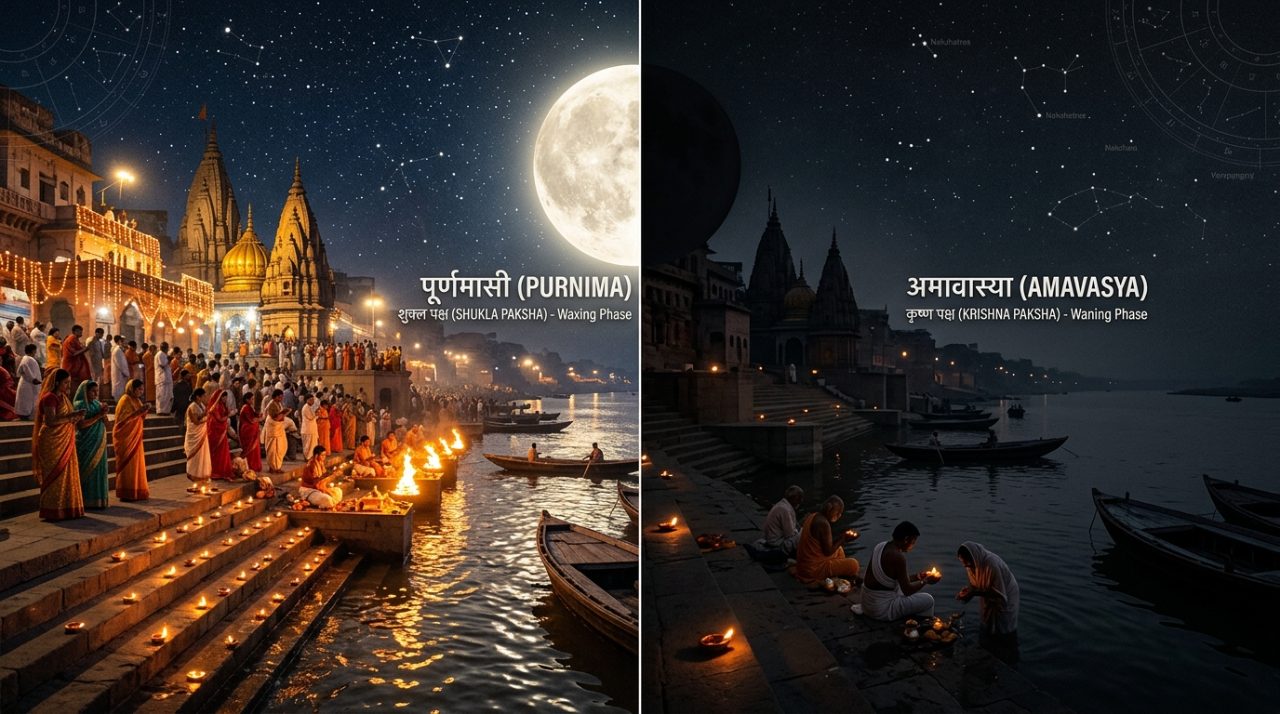
In Vedic astrology the Moon is the mind, and its monthly cycle sets a powerful rhythm for emotion and spiritual practice. Two points anchor that cycle: the full moon (Purnima) and the new moon (Amavasya).
Purnima, the full moon, is when the Moon is fully illuminated and at its most expansive. It is considered highly auspicious — a time of completion, gratitude, charity and celebration. Many festivals fall on Purnima, and it is regarded as ideal for meditation, mantra and devotion, when the mind is bright and full. Amavasya, the new moon, is dark and inward. It is a time for rest, reflection, honouring ancestors and releasing what no longer serves you — rather than starting bold new ventures.
Living with this cycle is simple and grounding. Use the waxing phase to begin and grow projects, the full moon to give thanks and complete, and the dark new moon to pause and reset. Aligning your intentions with the Moon’s natural breath brings calm, steady momentum to daily life and spiritual practice alike.
Classical Foundations in Jyotish
The Moon as the mind
Brihat Parashara Hora Shastra names the Moon (Chandra) the significator of the mind (Manas), emotions, the mother and nourishment. A strong, bright Moon is considered one of the greatest supports a chart can have, because every experience passes through the mind. The Moon's monthly cycle is therefore not just an astronomical event in Jyotish; it is a rhythm of the mind.
Tithi: the lunar day
A Tithi is the time it takes for the Moon to gain 12 degrees on the Sun. There are thirty in a lunar month, fifteen in each half:
- Shukla Paksha (the bright half): from the day after Amavasya to Purnima, while the Moon waxes.
- Krishna Paksha (the dark half): from the day after Purnima to Amavasya, while the Moon wanes.
Tithis are grouped into five types that repeat through each half: Nanda (joy), Bhadra (health), Jaya (victory), Rikta (emptiness) and Purna (fullness). Rikta Tithis, the 4th, 9th and 14th, are traditionally avoided for new ventures. The Tithi is one of the five limbs of the Panchang, alongside the weekday (Vara), the Nakshatra, the Yoga and the Karana.
Purnima and Amavasya
- Purnima: the Sun and Moon are opposite, 180 degrees apart, and the Moon is full. It is associated with completion, fullness, devotion and gratitude. Guru Purnima, Sharad Purnima and many other festivals fall on full-moon days, and the Satyanarayana puja is traditionally performed then.
- Amavasya: the Sun and Moon are conjunct and the Moon is invisible. It is associated with stillness, introspection and the ancestors. Pitru Paksha ends on Mahalaya Amavasya, and offerings to the ancestors (Tarpana) are made on Amavasya days throughout the year.
Eclipses
When a full moon or new moon falls near Rahu and Ketu, the lunar nodes, an eclipse can occur: a lunar eclipse at Purnima, a solar eclipse at Amavasya. Jyotish treats eclipse periods as times for prayer, mantra and quiet rather than for starting new ventures, and they are avoided in Muhurta.
House, Planetary & Dasha Dynamics
Your birth Tithi and Paksha Bala
The phase of the Moon at your birth is recorded in your chart. Paksha Bala, one component of Shadbala, rates the Moon's strength by its distance from the Sun. A Moon born close to full is strong in Paksha Bala; one born near Amavasya is weaker in this respect, although other factors can compensate. People born near Amavasya often benefit particularly from practices that steady the mind.
Where the full and new moons fall in your chart
Each month the full moon and new moon fall in particular signs, and therefore in particular houses of your chart:
- A new moon in your 10th house is a natural moment to plan career intentions quietly.
- A full moon across your 1st and 7th houses often brings relationship matters into the open.
- A full or new moon on your natal Moon or ascendant tends to be emotionally significant.
The effect is gentle and short-lived unless the dasha supports it. If you are running a Moon Mahadasha or Antardasha, the lunar cycle tends to be felt much more clearly.
The Moon's Nakshatra each day
The Moon passes through all 27 Nakshatras in about 27.3 days. Tara Bala, the relationship between the day's Nakshatra and your birth Nakshatra, is used to judge whether a day is favourable for you personally. Of the nine Taras, Janma, Vipat, Pratyari and Vadha are traditionally treated with caution, while Sampat, Kshema, Sadhaka, Mitra and Parama Mitra are considered supportive.
Muhurta and the lunar cycle
Classical Muhurta favours the Shukla Paksha for beginnings such as marriages, launches and moving home, and generally prefers a strong, waxing Moon. Amavasya is usually avoided for new ventures but is excellent for spiritual practice. Both Purnima and the Ekadashi Tithis are widely used for fasting and devotion.
Conscious Karma & Practical Vedic Remedies
Working with the Moon's cycle is one of the simplest ways to live Jyotish day by day.
- Purnima: meditation, mantra, gratitude and charity. Offering water to the Moon and reciting *Om Chandraya Namah* or *Om Som Somaya Namah* is traditional.
- Amavasya: rest, silence, reflection and remembering one's ancestors. A simple offering of food to those in need in their memory is a meaningful practice.
- Ekadashi: the eleventh Tithi of each half, traditionally observed with a light diet or fast and extra time for prayer.
- Waxing phase: begin projects, learn new skills and plant intentions.
- Waning phase: complete, simplify, clear clutter and let go of habits.
- Breath and Swarodaya: Shiva Swarodaya links the left nostril (Ida, the lunar channel) with calm, receptive activity. Noticing which nostril is active and choosing tasks accordingly is a practical lunar discipline.
- Pancha Mahabhuta: the Moon is linked with the water element. Hydration, time near water and a calm evening routine support a sensitive Moon.
None of these practices require belief in prediction. They are a way of giving your month a rhythm, and over time many people find that rhythm brings real steadiness to the mind.